Want to be in the loop?
subscribe to
our notification
Business News
VN€™S SMALL AND MEDIUM SIZED ENTERPRISES STRUGGLE FOR CREDIT
However, small and medium-sized enterprises (SMEs) will likely continue to face borrowing challenges, despite their significant contribution to the economy.
While Vietnam’s government has pledged to implement new measures to support the SME sector, including enhanced training programmes and the development of business incubators, small businesses will be looking for banks to follow suit.
Credit growth remains solid
A report issued by the SBV in early February found that lending expanded by 17.3 per cent in 2015, down slightly on the previous estimate of 18 per cent, but well up on the 13 per cent initially forecast at the start of the year, and outpacing credit growth from the last four years.
Most of last year’s lending was dong-denominated, signalling that the SBV’s efforts to reduce reliance on foreign currency were yielding results. Just 11 per cent of outstanding loans were in foreign currencies.
Robust economic growth – projected to reach 6.7 per cent in 2016, according to the SBV, on par with the eight-year high recorded last year – should help drive continued lending growth.
Challenges for smaller businesses
While the central bank anticipates strong aggregate loan growth, Vietnam’s SMEs are expected to face continued challenges in accessing credit, with the segment recording 4 per cent credit growth in the year to June 2015, according to the Vietnam Bank Association.
Meanwhile, lending to the high-tech app industry, which has been prioritised by the government as a growth industry, climbed by some 43 per cent over the ourse of 2015.
Only about 30 per cent of SMEs are able to secure bank loans despite measures introduced by the government to support SME development, according to a survey conduced by the Science Institute of SMEs Management.
As a result, many SMEs have been forced to borrow from non-conventional lenders at higher interest rates. A requirement that loans must be secured was cited as a particular issue, with a lack of collateral inhibiting SMEs’ perceived creditworthiness.
Other challenges included a general tightening of credit conditions, as lenders sought to curb non-performing loan ratios.
Risk to growth
In addition to inhibiting individual business development, poor access to credit for SMEs presents obstacles for broader economic growth, given that 95% of all registered companies in Vietnam are small businesses, accounting for an estimated 40 per cent of GDP and just over half of all employment.
According to Dennis Hussey, CEO of ANZ Vietnam, the country could follow a similar growth trajectory as Japan or Taiwan if its banking sector becomes better integrated with local SMEs and removes funding bottlenecks.
“Neither foreign nor local banks operating in Vietnam are geared towards funding smaller businesses,” he told OBG. “Accessing financing tends to involve leveraging personal resources, such as friends and family.”
Võ Tấn Hoàng Văn of Saigon Commercial Bank believes that banks also face barriers to tapping the SME market due to their location. Lenders, especially foreign banks, operate a restricted number of branches, predominantly in densely populated urban hubs, he explained, putting them out of reach for many smaller businesses.
“A significant number of businesses looking for lower-level funding will go to a local bank,” he told OBG. “With 55-60 per cent of the population living in rural areas, a broad network is a prerequisite for targeting that segment of the population.”
Potential rate rise a concern
The expected increase in credit demand could see interest rates rise in 2016, according to some analysts, potentially creating greater obstacles for SME financing. Borrowing costs could also come under pressure from any further upward interest rate movement by the US Federal Reserve, which has traditionally pressured developing economies like Việt Nam to implement rate hikes to prevent capital outflows.
Source: VNEP
Related News

BANKING / FINANCE / INSURANCE / TAX
REMITTANCES TO HCM CITY RISE NEARLY 40% IN Q3
Remittances to HCM City reached more than US$2.83 billion in the third quarter of this year, up 39.5 per cent from the previous quarter and 3.6 per cent year-on-year. This was the first quarter showing positive annual growth this year, helping narrow the decline in remittance inflows over the first nine months. According to the State Bank of Vietnam (SBV)’s Regional Branch 2, remittances transferred to HCM City through credit institutions and economic organisations totalled $2.835 billion in Q3, an increase of more than $802 million from the previous quarter.

TECHNOLOGY
TECH SECTOR GROWTH OPENS UP OPPORTUNITIES FOR VIỆT NAM TO GO GLOBAL
The growth of the electronics, semiconductor and high-tech sectors worldwide is opening up a variety of opportunities for Vietnamese enterprises to integrate more deeply into the global supply chain. However, to become suppliers for these corporations, domestic enterprises must meet rigorous standards regarding quality, technology, productivity and order fulfilment capabilities.
VIETNAM ECONOMY INVESTMENT
FOREIGN INVESTORS SEEKING A SYNCHRONISED MANUFACTURING ECOSYSTEM
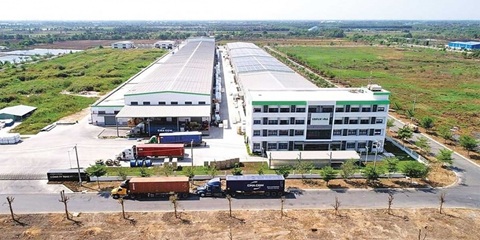
Instead of focusing only on land costs and incentives as usual, foreign investors are seeking a synchronised manufacturing ecosystem, from stable power supply and logistics to shared infrastructure and the convenience of completing residence procedures for experts to serve their long-term investment in the country.
MEMBER CORNER / PROMOTIONS
SENTRYSAFE FHW40200 – PROTECT YOUR VALUABLES, ENJOY PEACE OF MIND!
Looking for a reliable solution to protect your important documents, cash, and valuables from fire and water damage? Genuine SENTRYSAFE - Reliable protection for your valuables and peace of mind! Contact Sen Wai Vietnam for more information and personalized product recommendations.
PROPERTY / INDUSTRIAL ZONE
HCM CITY ATTRACTS US$5.7 BILLION INTO EXPORT PROCESSING AND INDUSTRIAL ZONES
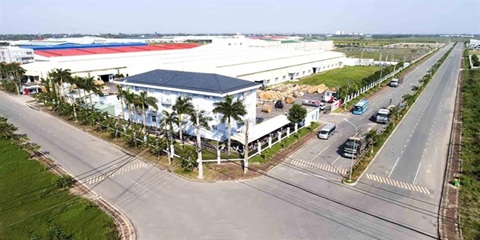
HCM City attracted US$5.7 billion in domestic and foreign investment into its export processing and industrial zones during the first nine months of 2026. The figure exceeded the city's full-year target by 31 per cent, highlighting strong momentum in high-quality industrial investment under Resolution No.10-NQ/TW. Total investment reached 131 per cent of the 2026 target of $4.25 billion and represented a 29 per cent increase compared with the same period in 2025, according to the city's Export Processing and Industrial Zones Authority (HEPZA).
INFRASTRUCTURE / CONSTRUCTION / LOGISTIC / PORT
DONG THAP PROVINCE STEPS UP INDUSTRIAL EXPANSION AND INFRASTRUCTURE CONNECTIVITY
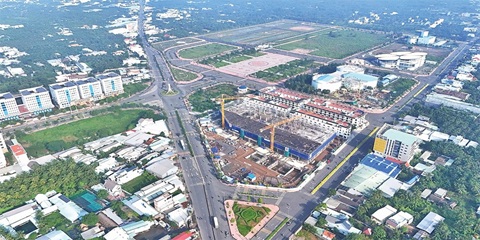
Accelerating public investment, strengthening inter-regional connectivity, and expanding industrial land are helping Dong Thap efficiently bolster competitiveness and drive economic growth. Following the 2025 merger of the former Dong Thap and Tien Giang provinces, the expanded Dong Thap province in the Mekong Delta faces mounting pressure to accelerate infrastructure development and strengthen connectivity among local economic zones, urban areas, industrial parks (IPs), and production centres.
Events Sponsors






















